Table of Contents
Introduction
One of the most frequent skin issues pitting dark spots and hyperpigmentation, that prevail across all skin types and tones is also common. They manifest as irregular skin discoloration spots and are commonly left behind when the skin is affected by acne, sunlight, inflammation or hormones. Although they are not poisonous, they may cause the skin to appear grey, irregular and lack brilliance.
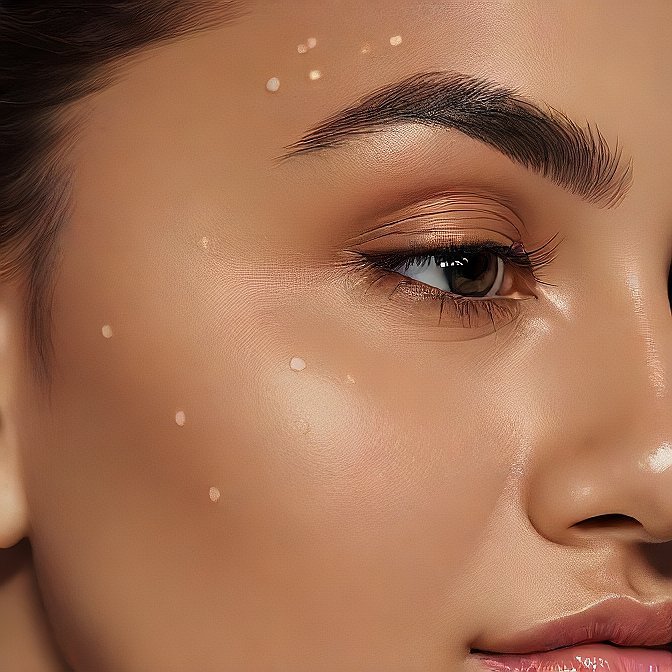
The primary cause behind such stubbornness is excessive melanin production, the pigment in charge of skin color. This causes more melanin to be produced on the skin when there is irritation or inflammation, making it dark in color and therefore may take weeks or months to fade.
Unprotected exposure to the sun, inability to leave pimples and the use of harsh skincare products may only contribute to how difficult the dark spots and hyperpigmentation may be. These marks easily become worse and heal slowly without adequate care.
The pleasant fact is that with the correct mix of skin care, natural treatment and lifestyle patterns, the discoloration can be within a gradual decrease and more balanced tone of the skin can be recovered. You will find 7 effective solutions in this guide to help dark spots fade naturally to reveal clearer, more beautiful skin and to achieve a natural, radiant look on your skin.
Get to Know the Dark Spots and Hyperpigmentation:
Pigmentation is of different varieties and two most widespread are post-inflammatory hyperpigmentation (PIH) and sun spots. PIH normally occurs following acne, injuries, or inflammation on the skin, whereas sun spots arise as a result of extended UV treatment with time. They both cause uneven skin tone with the slightest differences.
Skin damage contributes significantly in prompting discoloration. Although this may not be overtly seen, even a little activity such as picking at pimples or scratching at aggravated skin can prompt the body to come up with additional pigment during the healing process. This may unfortunately leave the aftermath of the problem when the initial problem has been cured.
Pigmentation could be exacerbated by various factors such as UV radiation, inflammation, and everyday irritation of the skin. One of the largest contributors is the sun exposure as it triggers melanin synthesis and in addition, darkens the already existing spots. Likewise, dark spots and hyperpigmentation may also be more noticeable and permanent with additional inflammation provoked by acne or severe skincare products.
1. Broad-spectrum sunscreen on your skin each day of your life
The most significant part of the dark spots and hyperpigmentation is our everyday sun protection. UV also causes us to develop new pigmentation and that which existed before is intensified to make it even more difficult to remove. The most effective treatments would also not help much regardless of the lack of sunscreens.
This defense inhibits additional melanin synthesis and helps the melanin to fade naturally on any existing dark spots.
Sensitive or acne-prone skin: To avoid clogging pores and breakouts, a non-comedogenic sunscreen is necessary that won’t lead to breakouts. Daily use, heavier gel formulas are usually preferred over lightweight.
In order to be on the safe side during the day, it is important to reapply sunscreen after every 2-3 hours when exposed to sunlight and particularly when outdoors, sweating, or spending a long period close to the window.
2. Vitamin C Power Bright Skin Naturally
One of the most proficient components to lighten dark spots and hyperpigmentation is Vitamin C, which can decrease the production of melanin and soften the general tone of the skin. It also assists in counteracting free radicals which may cause skin destruction and uneven pigmentation.
It is a strong antioxidant with sources of natural food, such as citrus fruits, berries, and leafy greens, and it can also be contained in topical serums specifically designed as antioxidants that are meant to be applied to the skin. Topical vitamin C can be applied more frequently to obtain noticeable results, directly acting on pigmented regions.
Vitamin C is commonly better applied in the morning as part of the skincare ritual since it is compatible with sunscreen and helps protect the skin against environmental damage and boost skin radiance during the day.
Nevertheless, as vitamin C may be active and effective, one should use lower levels at first, to prevent irritation, particularly in sensitive skin. The slow application will aid in allowing the skin to tolerate without compromising the ability to give visible results with time.
Check Out: Blackheads: 6 Proven Tips to Get Rid of Them for Good.
3. Time to fade dark spots with the Skin-Healing Magic
The ability to stimulate skin regeneration and aid in the faster healing of damaged skins cells can be listed among its greatest advantages. This will help lessen the emergence of the discoloration, and increase the overall skin clearance.
To make a basic DIY cure, fresh aloe vera gel could be used either applied directly to the area of the problem or combined with a few drops of lemon juice or honey (used sparingly) to form a natural brightening mask. One should leave it on during 15-20 minutes and then rinse under a lukewarm water.
4. Escribe de la frontera para velar a cuidar su frontera
The exfoliation effect is mild and hard to detect, though it is significant in enhancing the dark spots and hyperpigmentation through acceleration of the normal exfoliation of the skin. Repeated pigmentation can be messier and flatter as the dead skin cells accumulate on the surface and are more difficult to remove with time. By peeling this accumulation, fresh, healthier skin will come out much faster.
The majority of the skin types are managing hyperpigmentation, which requires exfoliation 1- 2 times in a week. Hyper-exfoliation may result in skin barrier weakening, which results in redness, sensitivity, and even exacerbates pigmentation. It is about consistency and not intensity.
We should not use harsh physical scrubs of huge sizes which may hurt our skin and cause further irritation and inflammation. Harsh scrubbing usually proves detrimental since inflammation is a prime cause of dark spots and hyperpigmentation.
5. Apply Natural Oils to uneven skin just in case of skins
Niacinamide (vitamin B3), another plentiful substance on pigmentation lists, is common in skincare recipes that are inspired by natural materials. It assists in decreasing the colored lumps, enhancing the skin barrier, and decreasing the passage of melanin to skin cells, providing a more sensible shade to the skin.
Natural oils also help to repair and make the skin barrier strong. A healthy barrier aids the skin to maintain moisture, minimize irritation and heal better, all of which are relevant to fading the pigmentation slowly.
Optimal use, after cleansing and toning, is to apply the oils on the slightly moistened skin of the face. This aids in absorbing and sealing in hydration. They can also be used regularly as a part and parcel of your nighttime regimen which will eventually boost skin texture and tone.
6. Celebrity Secret: Healthy Diet to Clear, Even the Skin
On the other hand, nutrient-rich diet also helps to keep the skin much smoother and more radiant. High in antioxidants and anti-inflammatory properties, such foods as berries, citrus fruits, leafy green vegetables and turmeric will help improve the oxidative load and help the skin regenerate.
You must also be hydrated. Water drinking throughout the day will help to squeeze the toxins out of the body, help in cell rejuvenation and give the skin the fresh and full look. Duller skin is also a result of dehydration and this could actually add to pigmentation.
Gut health is also considered to be linked with skin clarity. An advantage to the excessive gut bacteria would be an intensification of inflammation in the body leading to adamant pigmentation. Having a healthy gut will help to absorb nutrients and heal skin and serves as a crucial part of healing dark spots and hyperpigmentation internally.
7. Revive Skin with regular nighttime skincare
Night is when the skin is in its most active repair and slowing down the regeneration phase and therefore it would be very important in treating dark spots and hyperpigmentation. When one goes to sleep, the skin barrier can work better, and the number of cells turns over, which means that the damaged cells can be replaced in an even more effective way.
One of the routines that should be included in the end of the day clean up routine must be light cleansing that removes dirt, oil, sunscreen and other environmental impurities. The clean skin allows the action of the repair-focused ingredients to enter and be in action freely.
After cleansing, then certain special serums can be used in order to attack pigmentation in a more preventive fashion. The dark spots can gradually be lightened by the ingredients, which assist in the rejuvenation and whitening of the skin.
The consistency of such care at night is essential when the skin gradually improves in a few months, both in terms of tone and above all, texture.
Conclusion
Dark Spots and hyperpigmentation can be removed with time, though with an adequate mix of skin-squeezing, natural solutions, and exercise, evident progress can be attained. It is important to realize that no one particular product is the solution to pigmentation, but regular maintenance with an emphasis on the skin as well as addressing the internal balance.
Each daily sun protection and exfoliation, to anti-oxidant-rich ingredients like vitamin C, aloe soothing and rosehip oil, play a significant part in restoring the even skin color gradually. Aid in feeding your skin on the inside with a nutritious diet, hydrating, and reducing inflammation are also beneficial in the long term.
Regularity and patience are obligatory. With an easy, effective regimen and by avoiding all the usual traps, you can have a natural restoration of your skin, defore and making it clearer, brighter and more even-tone.
For more info: Click Here.
FAQs
1. Are there dark spots and hyperpigmentation and how many and how long are they?
It is dependent on the depth and pigmentation type. Lightly pigmented areas could resolve in 4-8 weeks, and deep hyperpigmentation might require some months after regular use of skincare and sunscreen.
2. Are dark spots and hyperpigmentation eliminable?
Yeah, lots of examples of post-inflammatory overpigmentation may clear up without a trace. Nevertheless, extensive or chronic pigmentation might need both natural treatment and professional intervention to be completely enhanced.