Table of Contents
Introduction
Although the stress is often associated with mental and emotional stress, there is a direct and physically visible impact of stress on the skin-the breakout, dryness, premature aging and dullness.
One example of the hormones secreted by the body as a response to stress is cortisol and may interfere with the normal equilibrium of the skin. The hormonal change can increase oil production, weaken the skin barrier, reduce the rate of healing, and result in inflammation. This exposes the skin especially making it more prone and weaker, which mostly becomes more sensitive to old age.
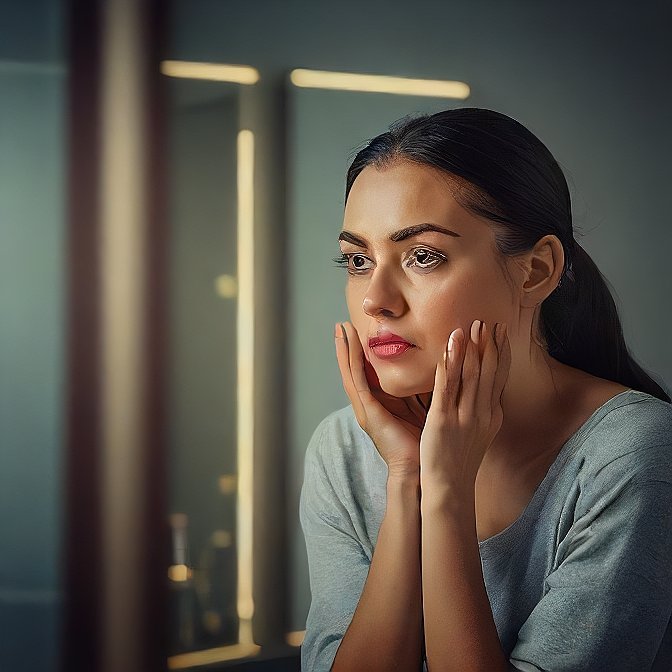
It is the reason why we tend to have bad skin during stressful moments: it’s acne breakouts, over-sensitivity or lack of glow happens so abruptly. These are not accidental changes but tend to be a physical response of the body to any internal stress.
The good news is that, given that the balance between skincare strategies and stress-management strategies is established properly, the balance may be restored and the health of the skin could be restored to a natural level. This guide will unlock to you 8 horrific effects of stress on the skin and the way to reverse it using brute force both internally and externally.
Finding out the Stress and Skin Relationship: What is happening to your Body?
To understand the relationship between stress and the Skin, it will be preferable to determine the internal response of the body when one is in distress. One of the key participants is the major stress hormone that is known as cortisol. The long-term effects of cortisol also lead to the disruption of the natural balance of the skin structure because it disrupts the process of oil production, hydration processes and skin repair.
The resulting stress increases the inflammation which is diffused throughout the body and this is directly transposed onto the skin. This can result in redness, breakouts, and sensitivity of the area with a slow healing rate. As time passes, it impairs the ability of the skin to protect and to heal properly.
The other notable effect is on the skin healing, skin barrier and production of oil. Precipitation of oil production in the sebaceous glands making the pores clogged and developing acne may occur due to the excess cortisol. At the same time, the healing period of the skin is reduced, and the marks and irritation last longer. It also compromises the defense mechanism, subjecting the skin to the vulnerability of environmental attacks.
These effects are more pronounced in the case of stress which is a chronic condition. The hormone and inflammatory activity balance is always disrupted by stress in the long-term, this is why the daily stress on emotions, in most cases, leads to frequent and chronic skin diseases.
1. Acne tantrums when stressed. You Never Even Saw It coming
Some of the most noticeable effects of Stress and Skin, we may name, the unexpected appearance of acne even in people who never had issues with acne before.
The surplus oil may be combined with skin cells and bacteria that have died thus resulting in clogged pores and inflammation. The result is increasingly swollen outbreaks and these are difficult to contain.
When it comes as a result of stress, acne is prone to appear along the jaw line, chin and cheeks; all these areas are closely related to hormonal alterations. They can also be severe, necessitating the use of such a breakout as compared to the usual surface pimples.
2. aging out of proportion: fine lines brought about by stress
Not only is it a problem that leads to breakout but also likely to accelerate signs of aging, and chronic stress is a problem. One of the most critical processes in which this happens is in a process where the collagen and elastin proteins which render the skin firm and young are broken.
Under the effects of cortisol taken in large amounts every day, collagen production slows down and already existing strands of collagen begin to degenerate. The outcome is an amassing fading away of skin bands and rigor.
3. Fire and Pain in the Skin
The sensitivity and redness are the other common manifestations of Stress and Skin. Stress compromises skin’s defensive barrier in order to make it less potent to prevent irritants, allergens and environmental aggressors.
The weaker the barrier, the more intense the reaction is on the hitherto tolerated products as the skin takes retaliation. It might lead to stinging, redness, burning, or overall post-application discomfort of skincare.
Other diseases have also been closely linked to stress like rosacea whereby an exacerbation is more frequent and more severe during periods of time when individuals are emotionally or physically stressed. It implies that stress management would be a prerequisite for skin sensitivity management and a relaxed and harmonious complexion.
Check Out: Sunburned Skin: 5 Fast and Soothing Ways to Heal Your Skin Quickly.
4. ABR 4 Dried, Alanoid Stressful Skin
One of the unidentified effects of Stress and Skin is dehydration. The ever-present stress on the body can disrupt the skin with regard to moisture retention. This factor contributes to the loss of hydration with time when you have to incorporate moisturizers on a regular basis.
The stress also affects the only provision of moisture barrier that upholds the role of locking the water, and also helps to keep the skin in opposition to the external irritants. When this wall is punctured, then the water passes out of the skin at a higher rate and increases the risk to the skin of being dehydrated and irritated.
This causes the skin to be tight, rough, dull, and without the normal shine on the skin. The dehydration can also accentuate fine lines and diminish the body’s general discomfort.
5. Excessive production of oil and Greasy skin
Where people have also said to have experienced a dry feeling, others also claim to be very oily. This can be referred to as the additional common impact of Stress and Skin imbalance.
The sebum production may be indirectly influenced by the hormonal change, such as an increase, through the impact of stress. This is responded to by the sebaceous glands that produce more and more oil, which is unnecessary.
This leaves a shiny oily skin that is generally volatile and uncontrollable. The skin ones that have died, also stand a possibility of merging with the surplus oil and putting the chances of obstructed pores and attacks uphill as well as making the skin activities changeable in the hard period.
6. Skin Diseases (Eczema, Psoriasis, etc.) Exacerbation
Stress is a more familiar precipitant to chronic skin diseases and hence a significant contributor to the Stress and Skin interaction. Eczema and dermatitis are typically worsened by emotionally or physically stressful situations.
This is because stress makes the body jump-start its inflammatory/immune system which overreacts in individuals already predisposed to such diseases. As the inflammation continues, this is also accompanied by further aggravation of the skin including itchiness, reddening and irritation.
The flare-ups are more likely to be stressful when stress is high and thus unless there is proper management of stress and skincare, one is likely to experience unstable skincare.
7. postponed recovery and acne scars
The second significant impact of Stress and Skin is that it decreases the natural healing of the skin. When the body is in a state of stress it inhibits the extent to which the damaged skin cells are rebuilt and repaired.
Such a relaxation of the rate of regeneration has an effect on the speed of healing of acne and the time it takes to appear as marks. Post-acne scars and pigmentation are, therefore, likely to last longer than the normal ones.
Even minor actions or pauses, or even annoyance may take longer to heal, and the inflammation will persist longer than expected. In the long run, it can also lead to the build-up of disproportionate skin colour and skin texture; hence, regular skin care of stress will serve as an essential factor towards skin healing.
8. fatigued, tired-Looking Skin through the protracted stress
One of the first effects of Stress and Skin imbalance to be noticed is a dull tired complexion. The prolonged stress could lead to insufficiency of blood flow and oxygen supply to the skin with a direct impact on its appearance as one that is fresh and alive.
The absence of radiance happens when the amount of blood that reaches the skin by way of the damaged circulation and insufficient oxygen is not sufficient. This explains the normal appearance of stressed skin as it tends to appear worn, bruised and unhealthy in the absence of severe outbreaks.
Inadequate sleep remains the other determinant that is more or less connected with levels of stress. Lack of sleep also denies the skin ample time to repair itself at night hence contributing to the loss of the natural sparkle and glow as time passes.
Habits of Life: Calming Stress and Skin
Stress and Skin balance are important with regard to exercise and a good lifestyle. Work also helps in providing the body with a detox machine that it requires to go through giving it the outlook of a healthier looking skin.
Sleep hygiene is also critical. Regular exercise and sleep, turning off screens before going to bed and generally having a good sleep also help in the more successful functioning of the skin repairing and regenerating.
A digital detox might be of help. The reduced number of regular eye time and social media also help to decrease the degree of mental stress, which, in its turn, leads to a decrease in the level of cortisol production in the organism and helps to keep healthy skin and a good mood.
Conclusion
The dynamic association between Stress and skin is well-matched, furtive and difficult to conceive. Stress does not simply have a direct effect on your mind but it has a direct effect on how the oil is produced, inflammation, the healing process of your skin and even how fast your skin ages. The effects could be witnessed in a plethora of ways, including the resistance of acne breakouts, dryness and even sensitivity and dullness.
The good news is that the changes cannot be permanent. With this conglomeration of adequate stress management techniques, positive skincare actions, healthy environments of existence and relaxing sleep, the condition of his or her skin can be changed drastically over time. It is all a question of continuity–you must uphold both your mind and your skin in body and soul.
When stress is properly controlled, the skin automatically calms down, making it clearer and glossier which signals a healthier internal balance.
For more info: Click Here.
FAQs
1. Is stress, in fact, what causes acne and other skin problems?
Yes, stress does increase the level of cortisol which may lead to excessive production of oil, inflammation, as well as delayed healing, all of which cause acne, sensitivity and other skin-related problems.
2. What are the time intervals of recovery of stress-induced noxious skin problems?
It hinges on the individual but with good stress management in terms of moderate use of skincare one will also be able to notice improvements being achieved within a couple of weeks/months.